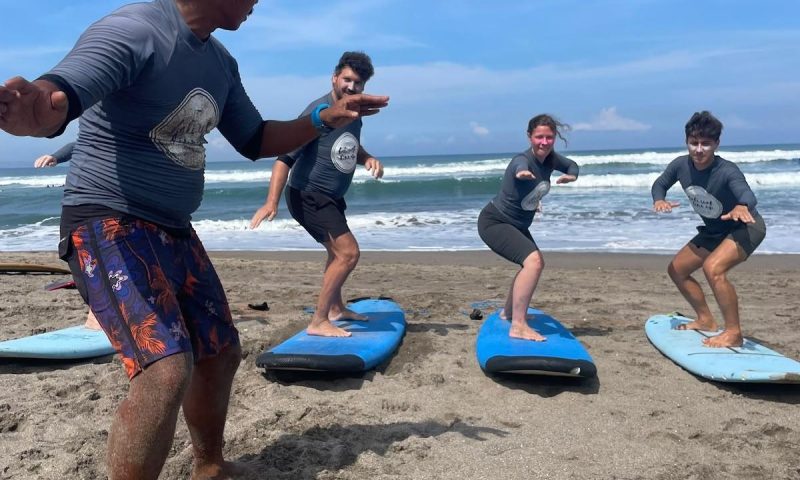
Doing nothing is often one of the best parts of a Bali trip because the island’s real value comes from unplanned moments, a long breakfast, an afternoon nap, a conversation that goes nowhere, rather than from cramming every hour with activities. Overpacked itineraries and Bali’s notorious traffic tend to turn a holiday into a version of the busy life travellers came to escape, while leaving space between activities lets the spontaneous, memorable parts of a trip actually happen. This is especially true after surfing, where the body needs real rest, which is why the rhythm of a good surf camp Bali or a surf and yoga retreat Bali is built around structure without over-scheduling every hour. Read on to see why slowing down, and occasionally doing nothing at all, might be the most underrated way to experience Bali.
There’s a particular kind of guilt that only seems to appear on holiday.
You’ve flown halfway across the world, probably spent more than you planned, taken precious days off work and finally made it to Bali. Then one afternoon you find yourself sitting by the pool doing absolutely nothing.
And a little voice appears.
Shouldn’t I be doing something?
There’s a temple you haven’t seen. A beach saved on your phone. Someone told you about a waterfall. You could squeeze in a massage before sunset if you left right now.
Or you could just… stay there.
Strangely enough, that might end up being one of the best decisions you make all week.
Because some of the moments people remember most from Bali aren’t really activities at all.
They’re the long breakfast when nobody got up from the table. The afternoon rain that cancelled a plan nobody was particularly excited about anyway. Sitting outside after surfing, still salty and tired, talking about absolutely nothing important.
You can’t really put those things on an itinerary.
You have to leave space for them to happen.
We bring our busy lives to Bali with us
Most people don’t arrive in Bali relaxed.
They arrive needing to relax.
There’s a difference.
The flight might be the final exhausting part, but usually the tiredness started long before the airport. Work, messages, appointments, deadlines, notifications, constantly having something you’re supposed to reply to.
Then you arrive on a tropical island and do something slightly ridiculous.
You make another to-do list.
Suddenly the holiday has a schedule that looks suspiciously like work.
Yoga at seven, breakfast at nine, waterfall at eleven, lunch somewhere you saw on Instagram, temple, sunset, dinner reservation.
Nothing individually sounds stressful. Put enough of it together and you’ve somehow created a very beautiful version of being busy.
We’ve seen the same thing happen with people who come to Bali to surf.
They’re excited and want to improve quickly, so naturally they want to surf as much as possible. But after a few days your shoulders are tired, your body has been thrown around by the ocean and sometimes the most useful thing you can do that afternoon is nothing at all.
Not another class.
Not another excursion.
Maybe just lunch and a nap.
Bali gets better when you stop trying to see all of it
This is particularly hard on a first trip.
Bali doesn’t look enormous on a map, so it’s tempting to think you can do Ubud, Uluwatu, Canggu, Nusa Penida, a volcano, three waterfalls and a couple of temples in a week.
Technically, perhaps.
Whether you’ll enjoy it is another question.
Traffic alone has a habit of destroying ambitious Bali itineraries.
There is also something slightly sad about arriving somewhere beautiful, taking a photo and immediately getting back into a car because the next beautiful place is waiting.
Stay longer.
That’s probably the simplest slow travel Bali advice we could give.
Pick fewer places and actually be in them.
If you like the west coast, for example, you could easily spend several days exploring around Canggu and Kedungu rather than changing accommodation every night. Surf one morning. Go somewhere for lunch. Visit Tanah Lot another day. Explore Kedungu. Leave an afternoon empty.
You don’t have to cross half the island for the day to count.

An empty afternoon feels surprisingly strange at first
Try it.
Don’t book anything after lunch.
The first couple of hours can actually feel uncomfortable if you’re used to constantly doing something.
You reach for your phone.
Check where you could go.
Maybe look at Google Maps for a restaurant you don’t need yet.
Eventually, if you resist the urge to turn the afternoon back into a project, something changes.
You stop checking the time.
Someone starts a conversation. You read. You sleep. You go for a swim because you feel like it rather than because swimming was scheduled between 15:00 and 16:00.
It doesn’t sound particularly life-changing.
It isn’t supposed to.
That’s what makes it nice.
Surfing teaches this better than most things
Surfing is actually quite good at ruining your plans.
You can decide tonight that tomorrow will be the perfect surf day. The ocean has not been included in that conversation.
Conditions change.
Tides move.
Wind picks up.
Sometimes the best session happens when you weren’t expecting much. Other times you wake up excited and discover that the sensible decision is to wait.
It’s one of the reasons we like the rhythm of a surf camp Bali.
There’s structure, of course, but the ocean has the final word. You gradually get used to adapting rather than controlling every detail.
Then there’s what happens after the session.
A beginner surf lesson can be exhausting. Paddling uses muscles you didn’t know you had, and repeatedly pushing yourself back onto a surfboard is considerably more tiring than it looks from the beach.
So you come back hungry, eat something and suddenly doing nothing feels fantastic.
That isn’t wasted holiday time.
Your body is recovering.
And tomorrow you get to surf again.
You probably won’t remember everything you booked anyway
Months after a trip, memories become selective.
You’ll remember some of the big things, obviously.
But it’s funny what else survives.
Maybe you won’t remember the name of the beach you drove an hour to see, but you’ll remember the dog that sat next to you at breakfast every morning.
You forget which temple was on day four, but remember laughing in the rain because everyone got soaked on the way home.
You remember a sunset because of who you were sitting with, not because it was number seven on a “10 Best Bali Sunsets” list.
That’s the problem with filling every hour.
The unplanned stuff needs somewhere to land.
There is a slower side between Canggu and Kedungu
Canggu is fun, but nobody is going to describe central Canggu as particularly sleepy these days.
There’s always somewhere to eat, somewhere to train, somewhere to work, someone going somewhere. That’s part of what makes the area appealing.
It’s also why staying directly in the middle of it isn’t necessarily the best choice if you came to Bali hoping to switch off.
Head further out and things start changing.
Kedungu has been getting much more attention lately, particularly from surfers and travellers looking beyond Canggu, but the atmosphere is still noticeably different. There’s more space and, in many parts, a much slower feeling.
We sit somewhere between the two.
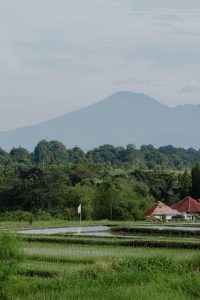
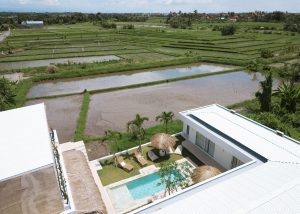
Kavo Maison is roughly ten minutes from Canggu and ten minutes from Kedungu, surrounded by rice fields.
That means you don’t really have to pick a side.
Go to Canggu because you want a particular restaurant.
Head towards Kedungu surf when conditions make sense.
Come home and spend the rest of the afternoon by the pool.
For us, that’s a much nicer version of experiencing this part of Bali than feeling like you need to stay inside the busiest part of Canggu the entire time.
Maybe your phone can have a holiday too
Nobody needs to dramatically throw their phone into a drawer for a week.
Unless you want to.
A digital detox in Bali can be much less serious than that.
Leave your phone in the room during breakfast.
Don’t take it to the pool for an hour.
Go to sunset and take one photo instead of spending twenty minutes trying to get the photo.
The irony of modern Bali is that you can sit in one of the most beautiful places in the world and still spend the afternoon answering exactly the same emails you would have answered at home.
Canggu makes this especially easy. The Wi-Fi is good, there are laptop-friendly cafés everywhere and remote work is completely normal.
Very convenient.
Also slightly dangerous if the whole reason you came here was because you needed a break.
Doing nothing isn’t the same as doing nothing with your trip
This distinction matters.
We’re not suggesting you fly to Indonesia and spend ten days staring at a wall.
Go places.
Learn to surf.
Visit a temple. Eat things you don’t recognise. Wake up before sunrise once if you really want to. Take the boat somewhere. Do yoga. Go dancing.
Just leave gaps between all of it.
A wellness retreat in Bali shouldn’t necessarily mean adding twelve new wellness activities to your day either.
Sometimes wellness is considerably less glamorous.
Sleep.
Eat properly.
Move your body.
Get outside.
Talk to people.
Don’t answer an email for a few hours.
There’s no certificate at the end.
You might just feel better.
Why this matters even more when you’re travelling alone
Solo travellers often feel an extra pressure to stay busy.
Sitting alone doing nothing can feel very different from sitting with someone doing nothing.
At least initially.
That’s one reason community-based accommodation can change the experience.
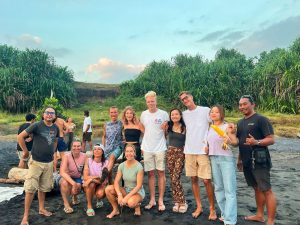
At a surf and yoga retreat Bali, you’re technically travelling alone, but you don’t necessarily spend the week alone. You see the same people at breakfast. You surf together. Someone wants coffee. Someone else is going to the beach.
Plans happen without you having to manufacture them.
And sometimes no plan happens.
Five people sit around talking for two hours instead.
Nobody thinks they’ve wasted the afternoon.

The days don’t all need a highlight
This might be the hardest habit to drop.
Social media has made travel feel strangely performative. Every day should have a location, a view, an activity, something worth showing.
But a good holiday doesn’t need seven highlight reels.
One day can just be… Tuesday.
You surfed in the morning.
Had breakfast.
It rained.
You read something.
Maybe you went for dinner later.
Nothing happened.
It was lovely.
What if you only have a week in Bali?
Then I’d argue that slowing down matters even more.
When time is short, the instinct is to fit more in.
Do the opposite.
Choose the part of Bali that matches why you came.
If you mainly want culture and yoga, spend time around Ubud.
If you came for the ocean, stay near the coast.
If learning to surf is high on the list, choosing a best surf camp Bali near Canggu and Kedungu means you can build the week around surfing without spending every day organising boards, transport and lessons yourself.
Then leave some space around it.
You can always come back to Bali.
Quite a lot of people do.
Maybe this is why people talk about Bali the way they do
There’s a lot of dramatic language around Bali.
People say they found themselves here. Healed. Changed their life.
Maybe.
Sometimes Bali is simply a very good holiday, and that’s more than enough.
But I do understand why people occasionally go home feeling slightly different.
For a week or two, they lived differently.
They went outside in the morning instead of opening a laptop.
They moved because surfing or yoga was fun, not because an app told them they’d missed a workout.
They ate breakfast with other people.
They weren’t quite as reachable.
And somewhere between all the things they came to Bali to do, they discovered how good it felt to have nothing to do at all.
At Kavo Maison Surf & Yoga Camp, that’s something we don’t want to schedule out of the experience. We’re surrounded by rice fields, roughly halfway between Canggu and Kedungu, with surfing, yoga, breakfast, cultural experiences and community built into the stay.
But there is also time when nobody is telling you what comes next.
Use it to explore.
Use it to sleep.
Or don’t use it at all.
Maybe that’s the point.
FAQ
Is Bali a good destination for slow travel?
Yes. Bali works particularly well for slow travel if you choose fewer bases and spend several days exploring each area rather than moving accommodation constantly. Areas outside the busiest tourist centres can also give you a completely different experience of the island.
Where should I stay if Canggu feels too busy?
You don’t necessarily need to leave the area completely. Staying outside central Canggu, particularly towards the quieter areas between Canggu and Kedungu, gives you access to the restaurants, surf and social life without being surrounded by the busiest streets all day.
Is Kedungu worth visiting?
Yes. Kedungu is becoming increasingly popular with surfers and travellers looking for an alternative to central Canggu. It has a different pace and is worth exploring if you’re staying on Bali’s west coast.
Can I surf in Kedungu?
Kedungu is known as a surf area, but whether a particular spot is appropriate depends on your surf level and the conditions that day. Beginners should always rely on experienced local instructors rather than choosing a break based only on its location.
Can a surf camp in Bali still be relaxing?
Definitely. A good Bali surf camp doesn’t need to fill every hour of the day. Surf sessions can be combined with yoga, recovery, community activities and enough free time to explore or simply rest.
What is a digital detox retreat in Bali?
It doesn’t necessarily mean giving up technology completely. A digital detox in Bali can simply mean creating intentional periods without work, notifications or social media, and spending more time outdoors, moving, resting and connecting with the people around you.
How many activities should I plan each day in Bali?
There isn’t a perfect number, but one main activity a day can often be enough, particularly if you’re surfing or travelling between areas. Leaving some time unplanned makes delays less stressful and gives you room for the spontaneous parts of the trip that you couldn’t have booked anyway.
At Kavo Maison Surf & Yoga Camp, we’re surrounded by rice fields and positioned roughly halfway between Canggu and Kedungu, around ten minutes from both. Our stays bring together surfing, yoga, breakfast, cultural experiences and community, but we deliberately leave room for guests to explore, rest or simply stay exactly where they are.
Because sometimes the best thing Bali gives you isn’t another thing to do.
It’s finally feeling okay about doing nothing.