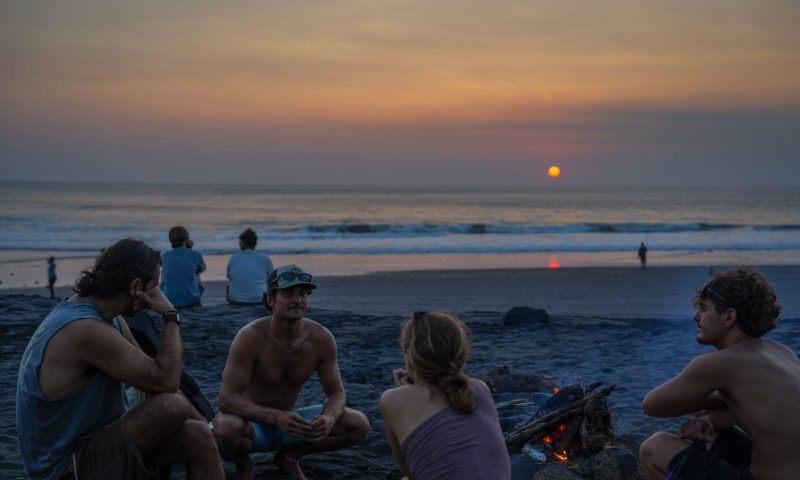
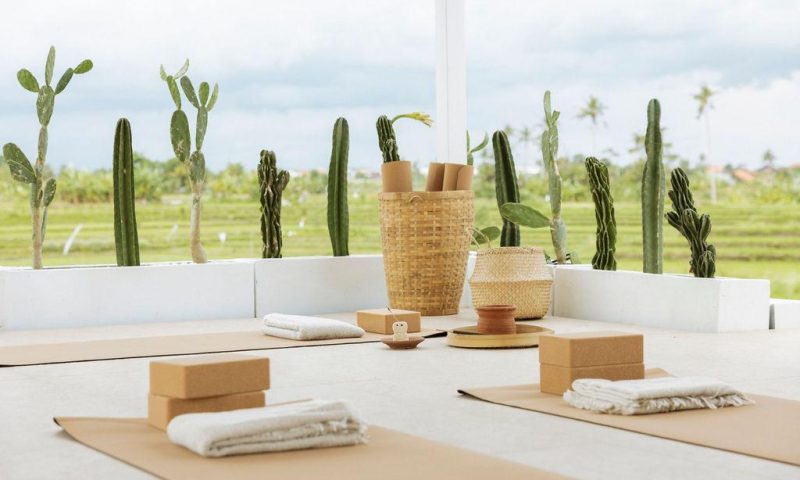
Many guests extend their stay at a surf camp Bali because a few days of surfing, unhurried breakfasts and familiar faces make the place feel less like accommodation and more like a temporary home. Instead of packing up and sitting in traffic every two days, staying in one base lets beginners taking surf lessons Canggu build on what they learned the day before, while solo travellers meet the same people naturally throughout the week. Located among rice fields roughly ten minutes from both Canggu and Kedungu, a surf and yoga retreat Bali like Kavo Maison makes it easy to explore both areas without changing rooms, and a longer stay doesn’t mean doing more, only feeling less rushed. Read on to see why so many travellers end up asking, “Can I stay a little longer?”, or explore our packages to plan your own stay.
It happens often enough that nobody is particularly surprised by it anymore. Someone arrives with five nights booked, another hotel already saved on their phone and a perfectly reasonable plan for the rest of Bali. Maybe Ubud is next, maybe Uluwatu, or perhaps they’re getting on a boat to one of the islands.
Then, a few days into the stay, comes the question: “Do you have my room available for a little longer?”
Sometimes they’re only thinking about adding a night or two. Sometimes they’ve already checked how much it will cost to change everything that comes next. Either way, something has shifted.
Most people don’t book a surf camp Bali expecting it to become one of the places they find hardest to leave. It’s normally just one part of a bigger trip: try surfing, meet some people, spend a few days near the ocean and move on.
Perfectly sensible plan.
It just doesn’t always survive contact with Bali.
A few days in, you stop feeling like you’re staying somewhere
The first morning at a new place always feels slightly unfamiliar. You need to remember where breakfast is, you’re still learning everyone’s names and you don’t really know how the day works yet.
Give it three or four days and those little uncertainties disappear. You walk into breakfast half awake and already know where you want to sit. You recognise who’s always ready for surf first and who needs coffee before attempting conversation. The staff know your name, you’ve stopped checking what time breakfast finishes and your room no longer feels like a room you checked into two days ago.
Nothing dramatic happened. The place simply became familiar.
That feeling is one of the reasons staying at a best surf camp Bali can be so different from changing hotels every couple of nights. You aren’t just getting used to the accommodation. You’re getting used to the people, the rhythm and the small routines that make somewhere start feeling comfortable.
And once that happens, packing your bag becomes considerably less appealing.

The people are often the hardest part to leave
Solo travellers frequently arrive at surf camps because they want to learn to surf and like the idea of meeting a few people along the way. The social side sounds nice, but it isn’t necessarily the main reason for booking.
Then you have breakfast with someone on your first morning, end up surfing together later, and perhaps go for lunch afterwards. Someone suggests sunset, another person joins, and the following morning you’re all back at the same table talking about yesterday.
By day three, nobody really remembers who originally invited whom.
That’s one of the reasons a surf and yoga retreat Bali can work so well for people travelling alone. You don’t need to repeatedly put yourself in situations where you have to meet strangers from scratch. You naturally see the same people throughout the day, and friendships have time to develop without anybody trying particularly hard to make them happen.
It also creates a strange version of time. Someone you’ve known for four days announces they’re leaving tomorrow and everyone reacts as though a long-term member of the group is moving away.
Then you start looking at your own departure date.
Surfing becomes another reason to add “just a few more days”
Beginner surfing has a slightly cruel sense of timing. Just when things begin to make sense, your departure date appears.
During your first surf lessons around Canggu, everything By day three can feel like separate instructions. Paddle. Look forward. Position your hands. Pop up. Don’t look at your feet. Somehow remember what the wave is doing at the same time.
A few sessions later, those pieces begin connecting. You stand for longer, need a little less assistance and start noticing differences between waves that all looked identical on day one.
Then you have a particularly good session and immediately want another one.
This is where consecutive days at a surf camp become useful. Progress in surfing isn’t linear, and nobody should promise you’ll reach a particular level after a set number of lessons. But regular practice gives your body a chance to remember what it learned the day before.
Staying longer also gives you more opportunities to experience different conditions around Bali’s west coast, from the Canggu area towards Kedungu surf spots when conditions and ability make them appropriate.
Of course, surfing also has a habit of humbling you. You can have your best session on Tuesday and feel like you’ve forgotten everything on Wednesday.
Which naturally means you need Thursday to investigate.
Your original Bali itinerary suddenly looks exhausting
Before arriving, moving every two or three nights sounded adventurous. You wanted to see everything, so changing hotels six times seemed completely reasonable.
After spending five days in the same place, the idea starts losing some of its charm.
You have to pack again. Check out. Sit in traffic. Find the next hotel. Check in. Work out where everything is. Find somewhere for breakfast. Learn another neighbourhood and then repeat the whole process two days later.
At some point, the question changes from “What will I miss if I stay?” to “Why exactly am I leaving tomorrow?”
There may be a very good answer. If you’ve been dreaming about visiting Ubud, go to Ubud. Bali has far too much to see to spend an entire trip in one corner of the island simply because you’re comfortable.
But sometimes the only answer is that leaving tomorrow was what you wrote in the itinerary three months ago.
Plans are allowed to change.
A new routine starts feeling surprisingly good

We tend to talk about holidays as an escape from routine, but perhaps routine itself isn’t really the problem. Maybe we’re just tired of our usual one.
Wake up, check the phone, rush somewhere, work, answer messages, come home tired and do it all again tomorrow.
A few days at a surf camp create another kind of routine. You wake up, see what the morning looks like, eat, surf, stretch, have lunch and spend time with people. There are things happening, but not every hour needs to be accounted for.
Technically, it’s still a routine. It just feels completely different.
After several days at a surf and yoga retreat Bali, this new rhythm can become normal surprisingly quickly. You start sleeping differently, eating at a table rather than in front of a laptop and getting physically tired from paddling rather than mentally tired from staring at a screen.
It’s often around this point that someone wanders over to reception and asks about extending.
Your phone quietly becomes less interesting
There’s no dramatic digital detox involved. Nobody needs to lock their phone away or announce they’re going offline for a week.
You simply start having more things happening in front of you.
During surf sessions, the phone stays behind. Breakfast turns into a conversation. Someone starts talking after dinner and suddenly an hour has disappeared. Maybe you spend the afternoon by the pool and realise later that you haven’t checked anything for quite a while.
For people who spend most of the year permanently reachable, that can feel surprisingly luxurious.
And once you’ve noticed how good it feels not to be mentally somewhere else all the time, immediately returning to a packed itinerary becomes a little less attractive.
Staying longer lets you find the Bali you didn’t research
Most first-time visitors arrive with some version of Bali already saved on their phones. Famous temples, beaches, cafés, waterfalls, viewpoints and restaurants have all been researched before the plane even lands.
Stay somewhere longer and another layer starts appearing.
A member of staff casually recommends somewhere to eat. Your surf instructor mentions a place nearby. Someone in the group went somewhere yesterday and wants to go back. You take a road you hadn’t noticed before and end up somewhere that was never part of the plan.
Often, those places become the ones you remember.
This kind of travel needs time, though. It’s difficult to stumble onto anything when every day already has five locations attached to it.
Sometimes you need a completely empty Tuesday.

Being between Canggu and Kedungu gives you room to explore
One of the things we increasingly appreciate about Kavo Maison’s location is that guests don’t need to choose between being close to Canggu and experiencing a quieter part of Bali’s west coast.
We’re roughly halfway between Canggu and Kedungu, around ten minutes from either direction.
Canggu gives you restaurants, cafés, shopping, gyms, nightlife and a huge international community. There’s almost always something happening, which is exactly why many travellers still want it on their Bali itinerary.
Head towards Kedungu, however, and the atmosphere starts changing. Kedungu has been attracting much more interest, particularly from surfers and travellers looking beyond the busiest parts of Canggu. There’s a growing food and lifestyle scene, surfing and a different pace that makes it interesting to explore before development changes it further.
Staying between the two means you can have dinner in Canggu one evening, explore Kedungu the next day and spend another afternoon doing neither.
You don’t have to move accommodation to experience both.
You start noticing Bali beyond the places on Google Maps
Spending longer in one area also gives you time to notice the ordinary things happening around you.
The Canang Sari offerings placed outside each morning stop being something you simply photograph and start becoming something you’re curious about. You notice ceremonies, learn a few Indonesian words, recognise people and perhaps return to the same local warung instead of searching for a new restaurant every evening.
That doesn’t make you a local. You’re still visiting somebody else’s island and culture.
But there’s a meaningful difference between passing through Bali and staying somewhere long enough to pay attention.
This is one reason we include Balinese cultural experiences at Kavo Maison alongside surfing, yoga and the more obvious holiday activities. Bali shouldn’t just be a pretty backdrop for a surf camp Bali experience. Understanding a little of the place you’re visiting makes the trip considerably more interesting.

Eventually, the camp becomes part of the trip rather than just accommodation
This is probably the point when an extension becomes most likely.
At first, the camp is where you’re sleeping while you explore Bali. After several days, it starts becoming somewhere you actually want to spend time.
You don’t necessarily need to leave every morning after breakfast because there are already people around. Someone might be reading by the pool, another person working for an hour, while a few people are deciding whether to go somewhere later.
You can join them.
Or not.
That’s important too.
Community works much better when it doesn’t mean compulsory socialising from breakfast until bedtime. Especially during a longer stay, people need space to disappear for a few hours and come back when they feel like it.
The result is less like staying at a hotel and a little more like temporarily having a home somewhere you didn’t expect to.
Staying longer doesn’t mean doing more
This is one of the nicest things about extending a trip.
Suddenly, the pressure disappears.
When you’re leaving in two days, there’s a mental list of everything you haven’t done yet. You should go to that restaurant tonight because tomorrow is your last chance. You should explore Kedungu this afternoon. You should go into Canggu. You should book the massage.
Add another five days and none of it is urgent anymore.
Kedungu can happen tomorrow.
Canggu can wait until Friday.
Maybe this afternoon you’re tired and don’t particularly want to go anywhere.
So you don’t.
A longer stay can actually mean doing fewer things each day while experiencing more of the place overall. You stop collecting locations and start settling into them.
Sometimes your body notices the change before you do
A lot of people arrive on holiday more wound up than they realise. They’re not necessarily burned out or obviously exhausted. They’ve simply become accustomed to always having something to do, answer or think about.
The shift away from that is usually gradual.
You’re outside more. Surfing makes you physically tired. Yoga and stretching slow the body down again. Meals happen with other people rather than beside a laptop. There’s enough happening to keep the days interesting, but enough free space that you aren’t racing from one activity to another.
Then, somewhere around day four or five, you realise you feel calmer.
Not transformed.
Not suddenly a completely new person.
Just a little less rushed.
And that version of you isn’t always particularly enthusiastic about checking out tomorrow morning.
How long should you actually stay at a surf camp in Bali?
For a first surf camp experience, around five to seven days is a good starting point for many travellers. It gives you enough time for several surf sessions, allows you to settle into the community and still leaves space for rest and exploring the surrounding area.
If surfing is one of the main reasons you’re coming to Bali, a longer stay can make even more sense. More consecutive sessions give you time to build on what you’re learning without feeling as though every day needs to produce dramatic progress.
That said, there’s nothing wrong with booking a shorter stay first if you’re unsure whether the surf camp experience is for you.
You can always ask to extend.
Provided nobody else has booked your room.
That’s the only part of this article we can’t make romantic.
Why do people really stay longer?
It’s rarely one big thing.
If you ask someone why they extended, the answer probably isn’t going to be a perfectly neat sentence about surfing, yoga or accommodation.
It’s everything together.
You wake up somewhere that has become familiar. There are people at breakfast you’re genuinely happy to see. You surf, or perhaps conditions mean the plan changes. The rest of the day has enough structure to feel easy and enough freedom to still feel like yours.
Canggu is close when you want energy. Kedungu is close when you want to explore somewhere different. And back at the camp, there are rice fields, yoga, food, people and no particular reason to rush off.
Then somebody mentions they’re staying another week.
You look at your itinerary.
And suddenly your next hotel doesn’t seem quite as important as it did when you booked it.
At Kavo Maison Surf & Yoga Camp, we’re positioned roughly halfway between Canggu and Kedungu, around ten minutes from both. Guests come for surfing, yoga, wellness and the Bali experience, but quite often it’s the slower rhythm and the people they meet that make them ask the question we hear so often:
“Can I stay a little longer?”
FAQ
How long should I stay at a surf camp in Bali?
Around five to seven days is a good starting point for many first-time guests. It gives you time for several surf sessions, recovery, meeting other travellers and experiencing the rhythm of a surf camp Bali without rushing through the stay.
Is a Bali surf camp good for solo travellers?
Yes. Surf camps can work particularly well for solo travellers because shared surf sessions, breakfasts and activities make it easier to meet the same people naturally throughout the week. You can still have time alone without having to organise your entire social life yourself.
Is it better to stay near Canggu or Kedungu?
The two areas offer different experiences. Canggu has a much larger café, restaurant, nightlife and wellness scene, while Kedungu has a quieter atmosphere and is becoming increasingly popular with surfers and travellers exploring Bali’s west coast. Staying between Canggu and Kedungu gives you easy access to both.
Can beginners take surf lessons around Canggu and Kedungu?
There are surf locations along Bali’s west coast suitable for different levels, but conditions change according to swell, tide and wind. Beginners should rely on experienced local instructors to choose an appropriate location rather than assuming a particular surf spot will always be beginner-friendly.
Will staying longer help me improve at surfing?
Regular practice can help beginners build confidence with paddling, pop ups and basic wave awareness. Progress is different for everyone, though, and staying longer doesn’t guarantee a particular level. Rest, coaching and suitable ocean conditions all matter.
Can I extend my stay once I’m already at Kavo Maison?
Extensions may be possible depending on room availability. If you’re travelling during a busy period, however, the same room may already be booked after your original departure date, so a last-minute extension can’t always be guaranteed.
What is included in the experience besides surfing?
A surf and yoga retreat Bali can offer much more than time in the ocean. At Kavo Maison, the experience combines surfing with yoga, community, breakfast, cultural activities and free time, giving guests the chance to explore Canggu, Kedungu and the surrounding area at their own pace.